📮 선생님이 규민이에게
규민아, 꾸준히 하는 걸 보니 참 장하다. 7월부터 지금까지 꾸준히 들어와서 8화 「산속의 군대 — 의병」까지 읽었더구나. 한 번에 많이 하는 것보다 끊기지 않는 것이 훨씬 어렵고, 훨씬 값진 일이란다.
지금 11화까지 준비해 두었어. 다음 장이 필요하면 언제든 카톡으로 이야기해 주렴. 바로 만들어 줄게.
— 연소사 선생님 · 2026년 9월 22일
CHAPTER 4 · 1894
죽창을 든 농민들
Farmers with Bamboo Spears
동학농민운동 이야기
 AI 상상화
Scene 1
An Unfair Burden
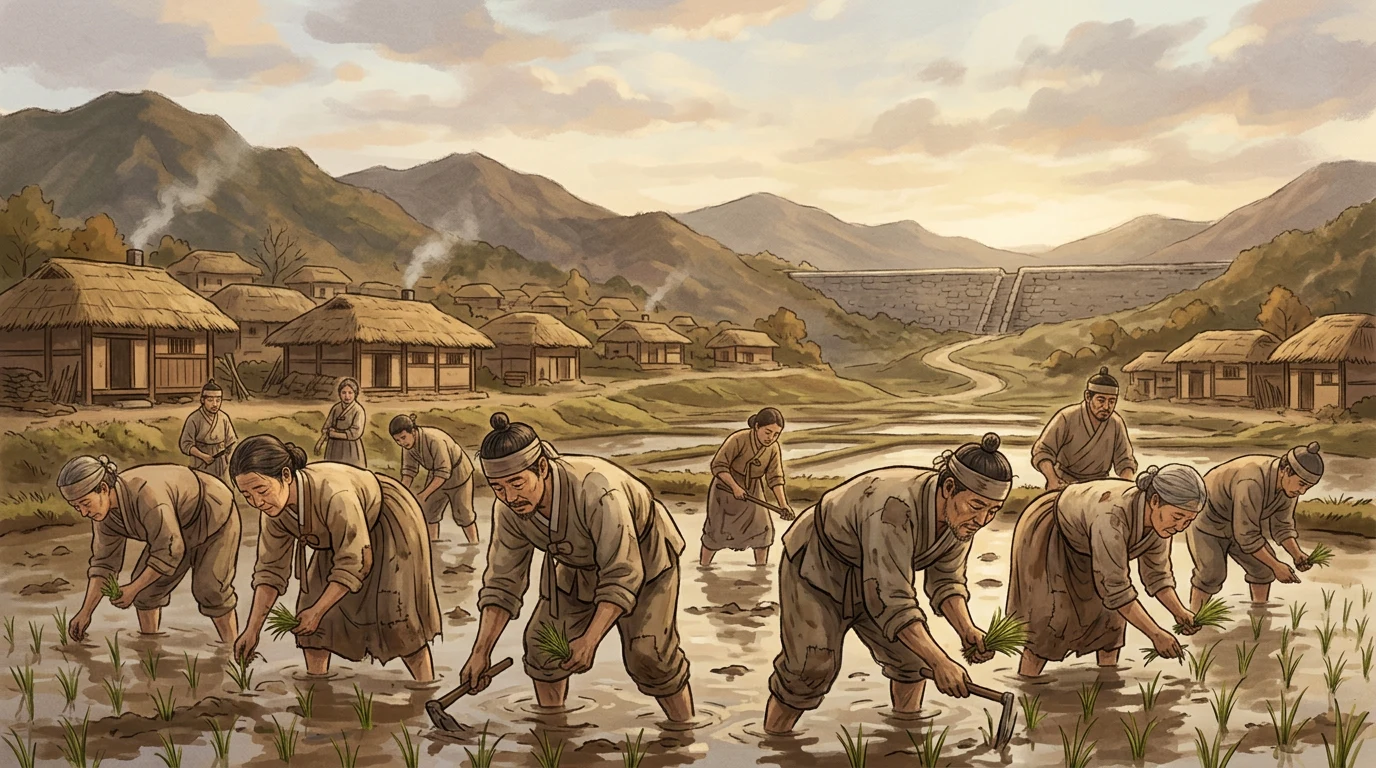
In 1894, in a village in Jeolla Province, farmers worked hard in their rice fields every day. Life used to be simple here — farmers shared water from an old reservoir fairly. But a local magistrate named Jo Byeong-gap changed everything. He forced farmers to build an unnecessary new reservoir, and then made them pay heavy taxes just to use its water. Many families could barely afford enough rice to eat.
1894년, 전라도의 한 마을에서 농민들은 매일 논에서 힘겹게 일했습니다. 예전에는 이곳의 삶이 단순했습니다 — 농민들은 오래된 저수지의 물을 공평하게 나누어 썼습니다. 하지만 조병갑이라는 지방 관리가 모든 것을 바꾸어 놓았습니다. 그는 농민들에게 필요하지도 않은 새 저수지를 짓게 하고, 그 물을 쓴다는 이유로 무거운 세금을 물렸습니다. 많은 가정이 먹을 쌀조차 겨우 마련할 정도였습니다.
magistrate 지방 관리reservoir 저수지tax 세금barely 겨우, 간신히
 AI 상상화
Scene 2
Jeon Bong-jun Calls the Farmers
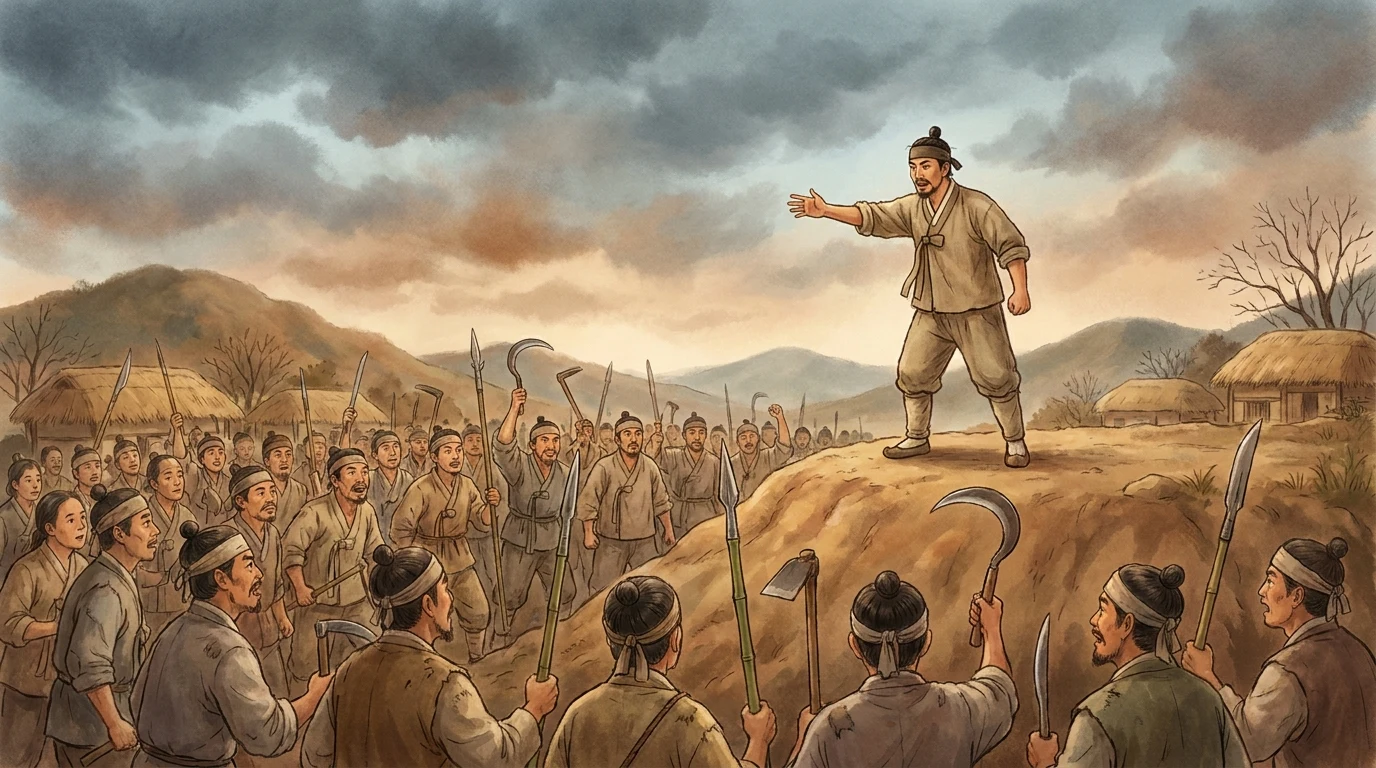
A farmer and Donghak believer named Jeon Bong-jun decided he could not stay silent. He gathered angry farmers from nearby villages and spoke about fairness and justice. Soon, thousands of farmers joined him. They did not have real weapons like trained soldiers did, so they picked up whatever they could find — bamboo spears, sickles, and hoes. Together, they marched toward the magistrate's office.
동학을 믿는 농민이었던 전봉준은 더 이상 가만히 있을 수 없다고 마음먹었습니다. 그는 근처 마을의 화난 농민들을 모아 공정함과 정의에 대해 이야기했습니다. 곧 수천 명의 농민이 그와 함께했습니다. 이들에게는 훈련받은 군인들이 가진 것 같은 진짜 무기가 없었기에, 손에 잡히는 것은 무엇이든 들었습니다 — 죽창, 낫, 호미까지요. 함께, 그들은 관아를 향해 행진했습니다.
gather 모으다justice 정의weapon 무기sickle 낫
 AI 상상화
Scene 3
Victory at Hwangtojae
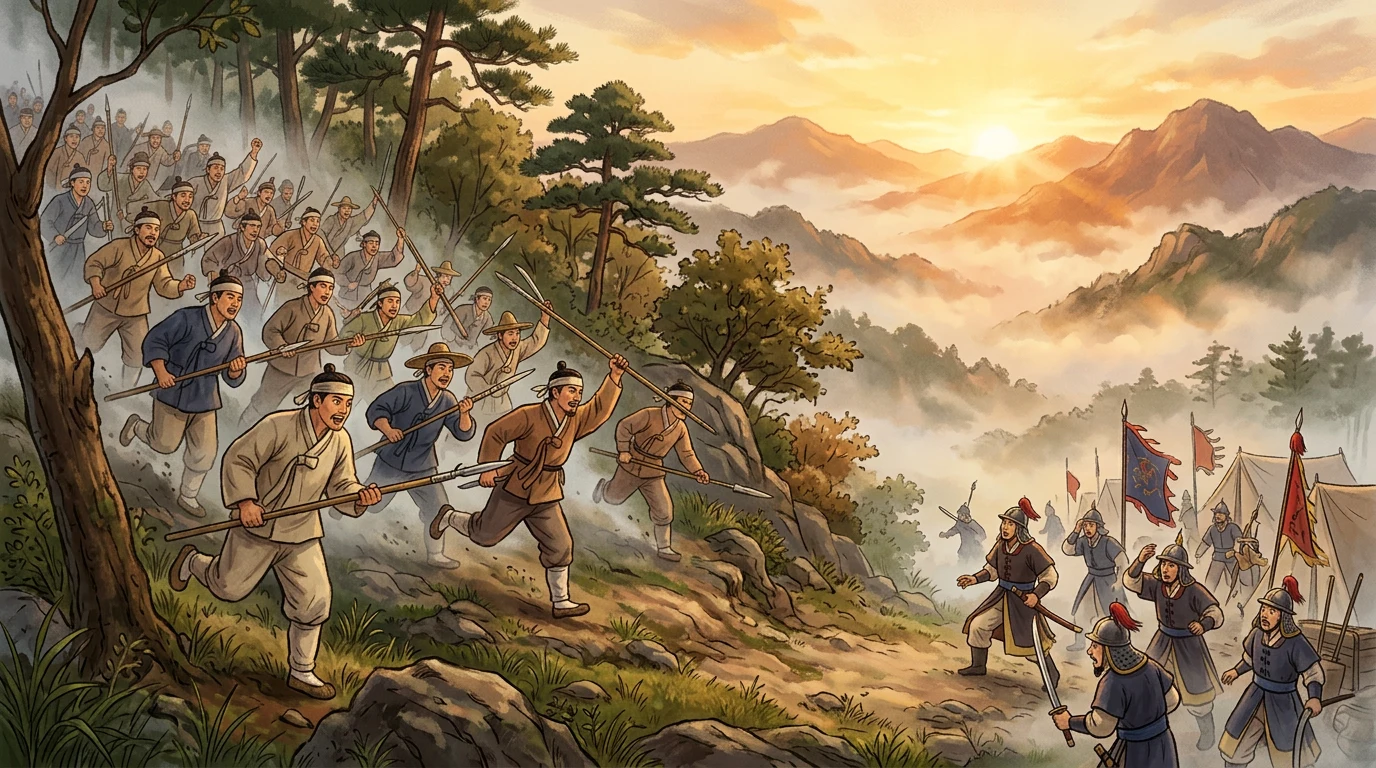
The government sent trained soldiers to stop the farmers. Most people expected the untrained farmers to lose easily. But at a hill called Hwangtojae, the farmers used the land cleverly, attacking from higher ground at dawn while the soldiers were still resting. To everyone's surprise, the farmers won a clear victory. News of it spread quickly, and even more farmers joined the growing army.
정부는 훈련된 군인들을 보내 농민들을 막으려 했습니다. 대부분의 사람들은 훈련받지 못한 농민들이 쉽게 질 것이라 예상했습니다. 하지만 황토현이라는 언덕에서, 농민들은 지형을 영리하게 이용해 군인들이 아직 쉬고 있던 새벽에 높은 곳에서 기습했습니다. 모두의 예상과 달리, 농민들은 확실한 승리를 거두었습니다. 이 소식은 빠르게 퍼졌고, 더욱 많은 농민들이 커져 가는 군대에 합류했습니다.
expect 예상하다cleverly 영리하게dawn 새벽victory 승리
 AI 상상화
Scene 4
A Call for Help from Abroad
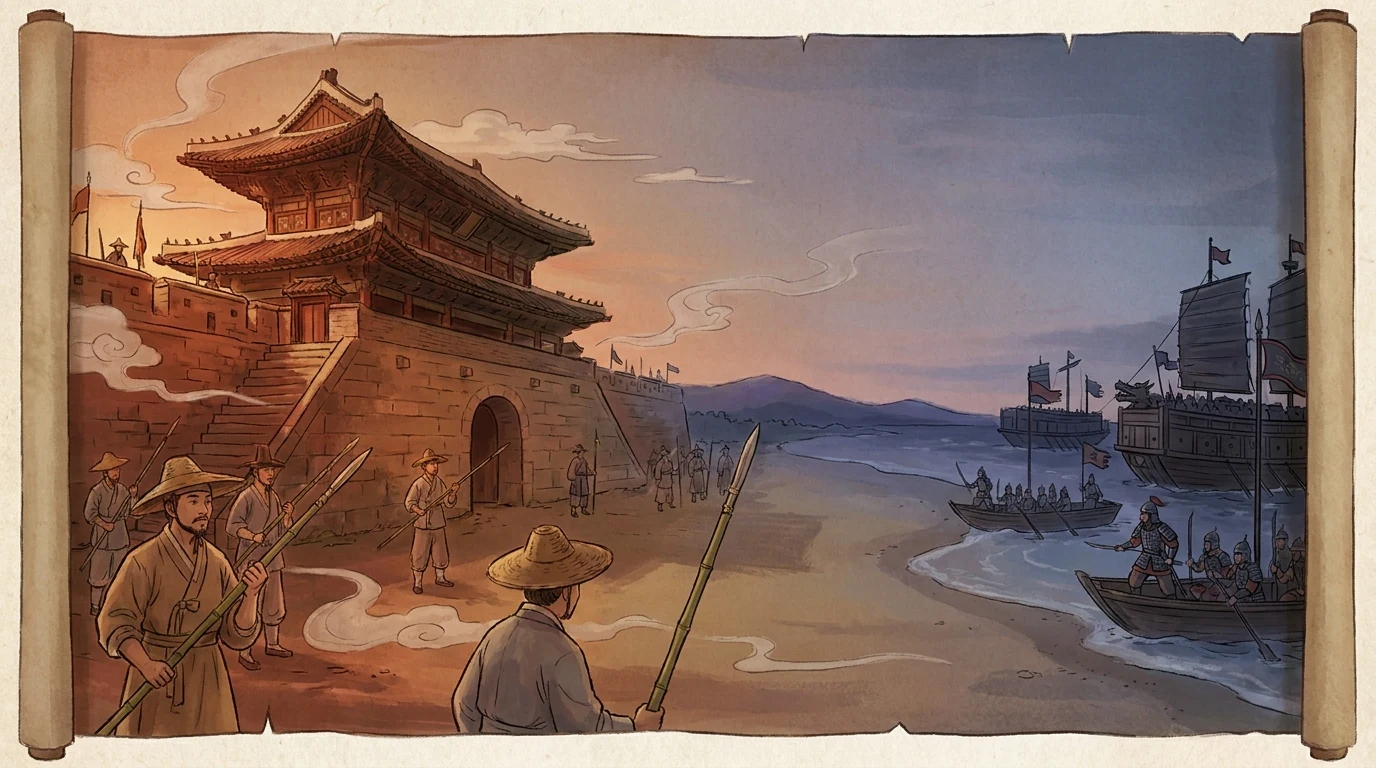
By June 1894, the farmers had grown so strong that they captured Jeonju, an important regional capital. The Joseon government panicked and asked China for military help to stop the uprising. But under an old treaty between China and Japan, Japan also had the right to send its own troops whenever China did. Soon, both Chinese and Japanese soldiers arrived in Korea — a country the farmers had never invited them into.
1894년 6월, 농민군은 매우 강해져서 중요한 지역 중심지인 전주성을 점령했습니다. 조선 정부는 당황해서 봉기를 막아 달라며 청나라에 군사 도움을 요청했습니다. 하지만 청과 일본 사이의 오래된 조약에 따라, 청이 군대를 보내면 일본도 자국 군대를 보낼 권리가 있었습니다. 곧 청나라와 일본 군인들이 조선 땅에 들어왔습니다 — 농민들은 그 누구도 초대한 적 없는 군대였습니다.
capture 점령하다panic 당황하다treaty 조약uprising 봉기
🔍 역사 코너 — 이름과 숫자, 정확히 알기
이 사건을 부르는 이름은 시대에 따라 달랐습니다.
📖 예전에 쓰이던 표현 — 일제강점기에는 이 사건을 "동학란" — 즉 "동학의 난동, 소요"라는, 마치 단순한 소란처럼 깎아내리는 이름으로 불렀습니다.
🔬 오늘날 정설 — 지금은 이 사건을 동학농민운동(또는 동학농민혁명)이라 부릅니다. 부당한 세금과 억압에 맞서 일어난, 정당한 이유가 있는 사회 운동이었다는 것이 역사학계의 통설입니다. 이름 하나에도 그 사건을 어떻게 바라보는지가 담겨 있는 셈입니다.
또한 마지막 전투였던 우금치 전투에서 정확히 몇 명의 농민이 희생되었는지는 기록마다 숫자가 다르게 전해집니다. 확실한 것은 "아주 많은 농민이 목숨을 잃었다"는 것이고, 정확한 숫자는 오늘날까지도 하나로 확정되어 있지 않습니다.
 AI 상상화
Scene 5
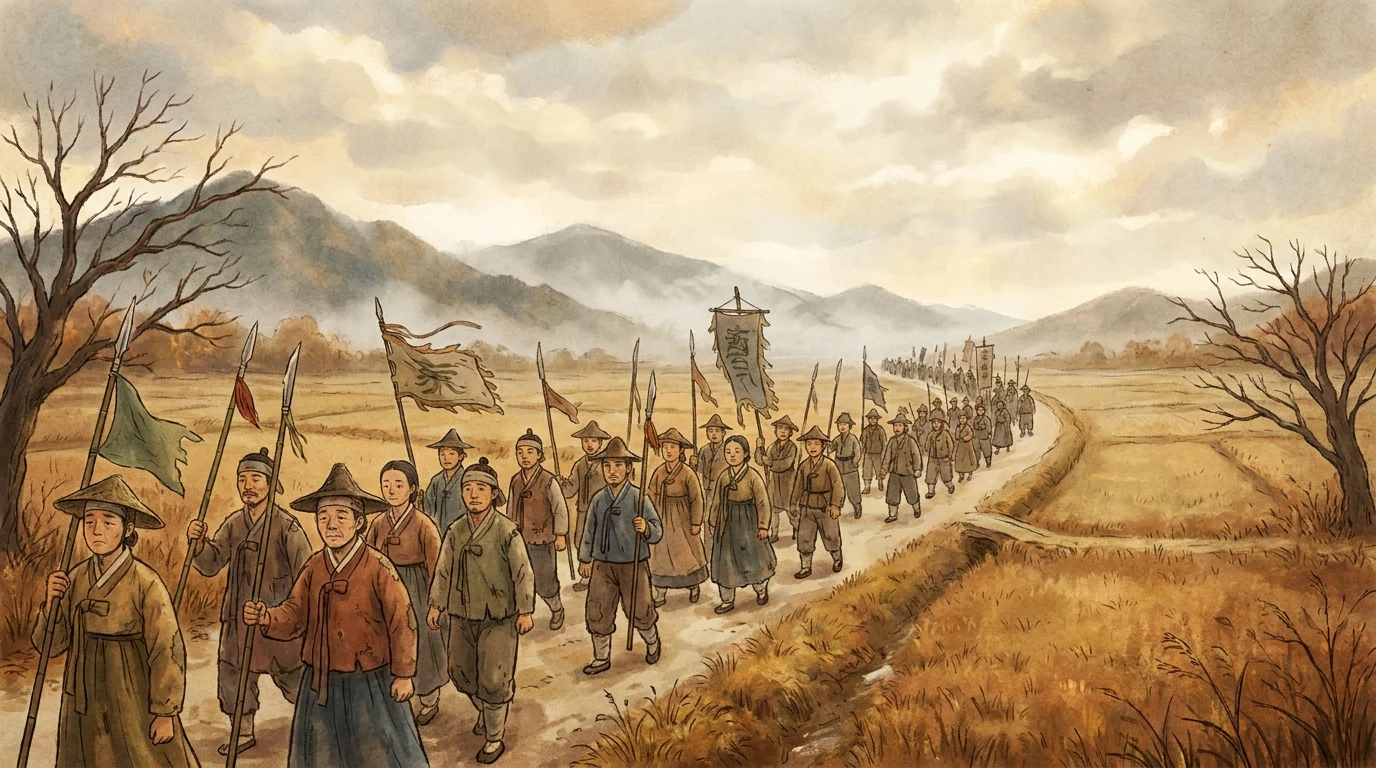
Marching Toward Gongju
The farmers reached a truce with the government, and many returned home. But Japanese troops stayed in Korea and began interfering in the government far more than before. Jeon Bong-jun rose again. This time, farmers from across the country marched north together, determined to drive the foreign soldiers out of their land. Their target was a city called Gongju.
농민군은 정부와 휴전을 맺었고, 많은 이들이 집으로 돌아갔습니다. 하지만 일본군은 조선에 남아 이전보다 훨씬 더 깊이 정부 일에 간섭하기 시작했습니다. 전봉준은 다시 일어섰습니다. 이번에는 전국 각지의 농민들이 함께 북쪽으로 행진했습니다, 자기 땅에서 외국 군대를 몰아내겠다는 굳은 결심으로요. 그들의 목표는 공주라는 도시였습니다.
truce 휴전interfere 간섭하다determined 굳게 결심한drive out 몰아내다
 AI 상상화
Scene 6
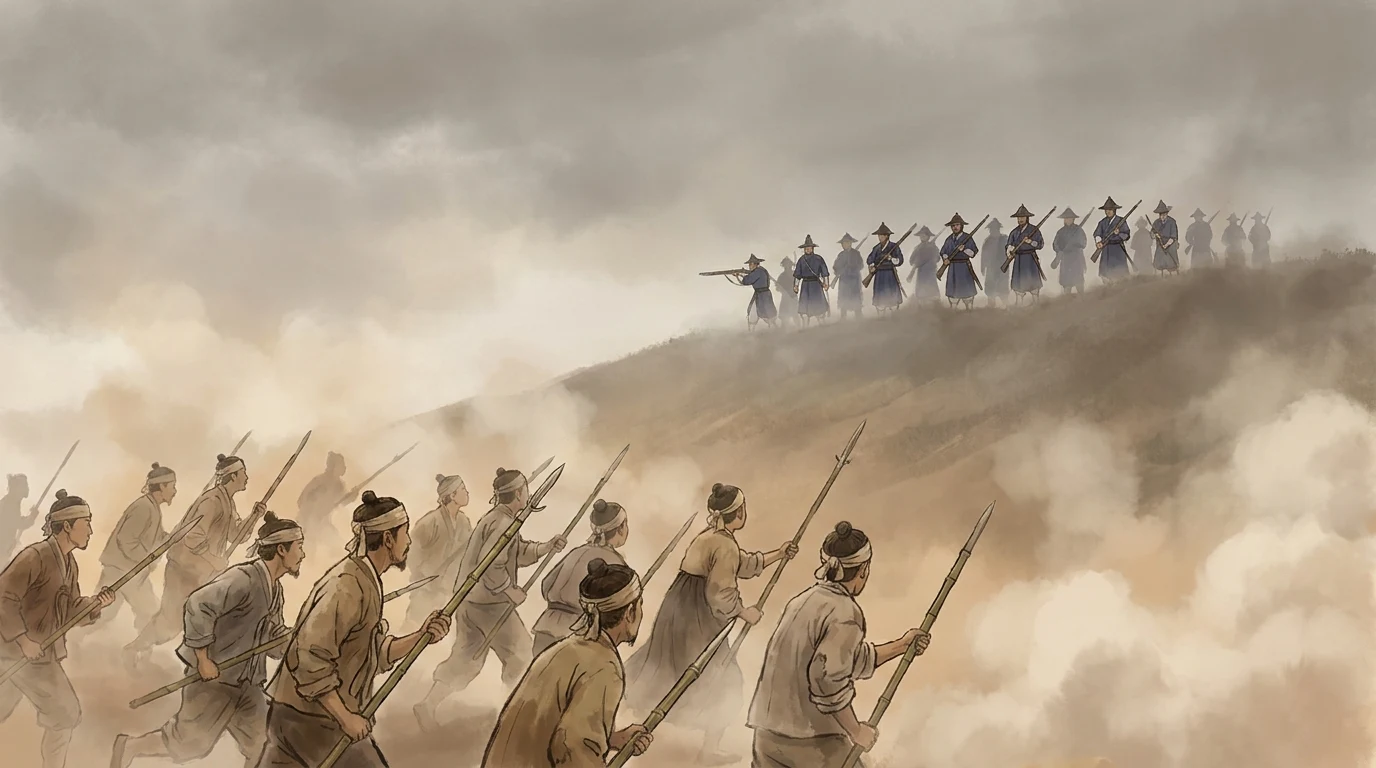
The Battle of Ugeumchi
At a hill near Gongju called Ugeumchi, tens of thousands of farmers with bamboo spears faced Japanese and government soldiers armed with modern rifles and machine guns. The farmers charged again and again, but their courage was no match for such powerful weapons. Most of them were killed. Jeon Bong-jun was later captured and executed. But people never forgot that ordinary farmers had once stood up together against injustice.
공주 근처 우금치라는 언덕에서, 죽창을 든 수만 명의 농민들이 근대식 소총과 기관총으로 무장한 일본군·관군과 맞섰습니다. 농민들은 몇 번이고 돌격했지만, 그들의 용기만으로는 그토록 강력한 무기를 이길 수 없었습니다. 대부분이 목숨을 잃었습니다. 전봉준은 이후 붙잡혀 처형되었습니다. 하지만 사람들은 평범한 농민들이 한때 부당함에 맞서 함께 일어섰다는 사실을 결코 잊지 않았습니다.
rifle 소총charge 돌격하다powerful 강력한injustice 부당함
✅ 이해 확인 (Comprehension Check)
1. Why were the farmers in Jeolla Province so angry at the magistrate?
정답: B — 조병갑이 불필요한 저수지를 짓게 하고 무거운 물세를 물렸다.
2. How did Japan get the legal reason to send troops to Korea?
정답: B — 청·일 간 조약에 따라 청이 군대를 보내면 일본도 보낼 수 있었다.
3. What happened to most of the farmers at the Battle of Ugeumchi?
정답: B — 근대식 무기 앞에 대부분의 농민군이 목숨을 잃었다.
📌 오늘의 문법 — used to (예전에는 ~했다)
"Life used to be simple here — farmers used to share water from an old reservoir fairly."
used to + 동사원형은 "예전에는 ~했다(하지만 지금은 아니다)"라는 뜻으로, 지금과 달라진 과거의 습관이나 상태를 말할 때 씁니다. 위 문장에서 "used to be simple"과 "used to share"는 조병갑이 오기 전, 마을의 삶이 지금과는 달리 단순하고 공평했다는 것을 강조합니다. 과거의 규칙적인 습관을 말할 때 쓰지, 어쩌다 한 번 있었던 일에는 쓰지 않아요.
used to be 예전에는 ~였다used to share 예전에는 나누었다↔ not anymore 더는 아니다
오늘의 전체 단어
magistratereservoirtaxbarelygatherjusticeweaponsickleexpectcleverlydawnvictorycapturepanictreatyuprisingtruceinterferedetermineddrive outriflechargepowerfulinjustice
📖 이 이야기의 배경을 한국어로 더 자세히 알고 싶다면 → 고1 한국사 교과서 「근대국민국가 수립운동」
규민이의 영어로 보는 우리 역사 · 4화 · 동학농민운동(1894)